
Tokens in Roman Athens
The Herulian sack of Athens in AD 267 ended many ancient institutions, including the use of civic coinage and tokens. However, tokens recovered from this period offer insights into festival dynamics preceding the sack.
Video: “A Roman House in Athens and its Tokens“
The symbola of Roman Athens were used as entrance tickets to festivals or for distributions (gifts or payments) linked to festivals celebrated by the ephebes and the Sacred Gerousia.
The imagery on the tokens evokes Athens’ glorious past and cultural memory by depicting mythological figures, legendary heroes (Theseus, Herakles, Themistokles), gods (Athena, Dionysus, Poseidon), and classical monuments. This symbolism reinforced Athenian identity amid the broader Roman Empire.
The tokens exhibit abundant references to specific festivals such as the Panathenaia, Great Dionysia, Theseia, and other civic celebrations linked to both Athenian tradition and the imperial cult.
Many tokens were countermarked multiple times, indicating their use in recurring festival events. The issuing authority appears consistent, possibly linked to the sacred Gerousia, which oversaw some Athenian religious and civic festivals.
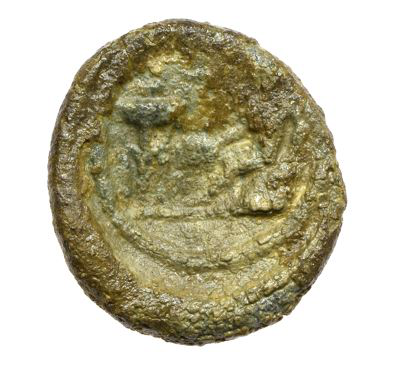
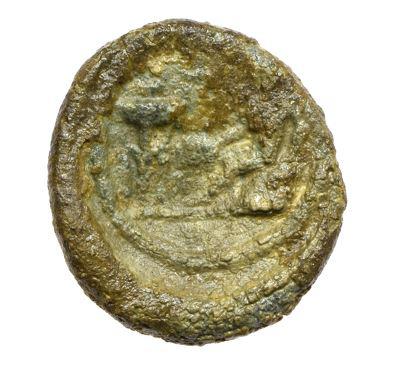
Lead token with Herakles reclining and tripod, referring to Commodus.
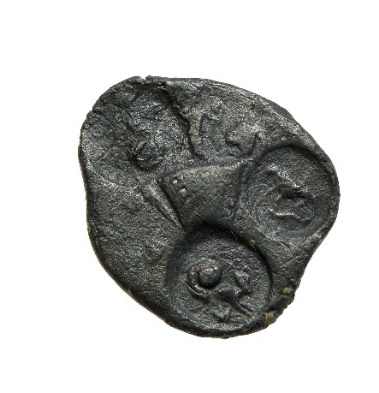
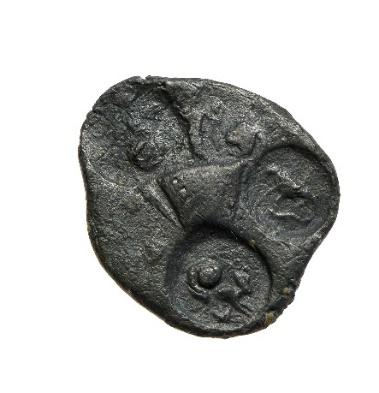
Three countermarks indicating multiple attendance.
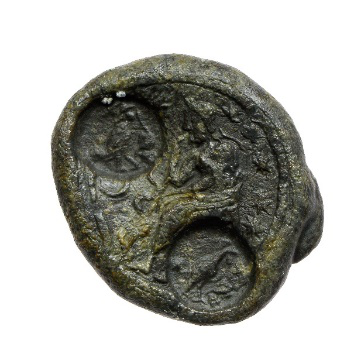
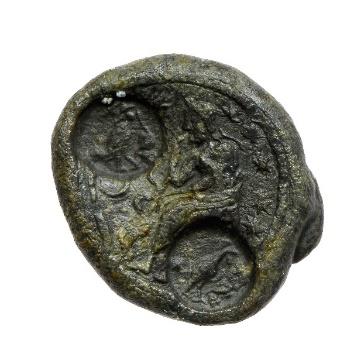
Asklepios seated left on stool, leaning on serpent staff, two countermarks.
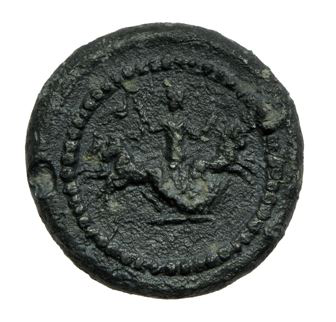
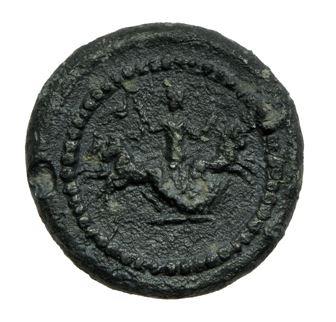
Sol invictus in spread quadriga, referring to Aurelian.
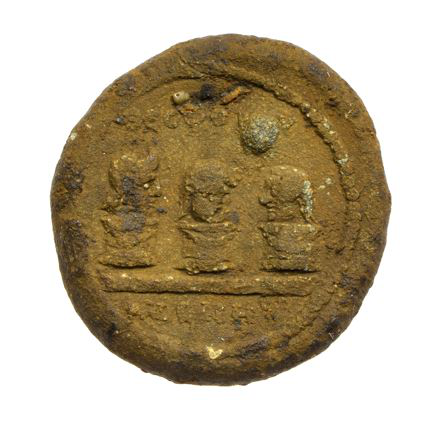
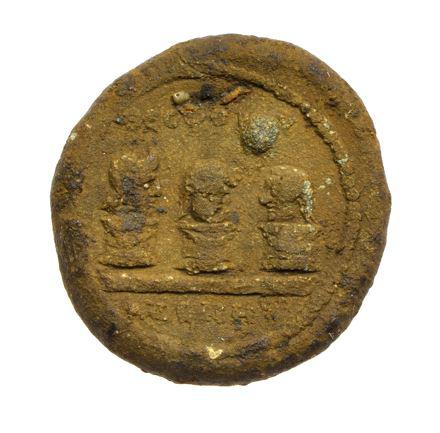
Lead token for a theatre performance. Three theatre masks on pedestals, inscribed Theophoroumene, Menander’s play.
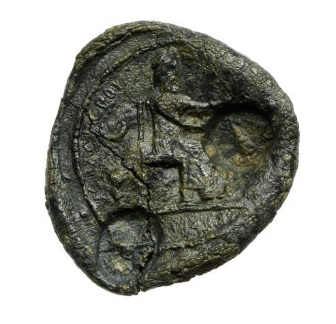
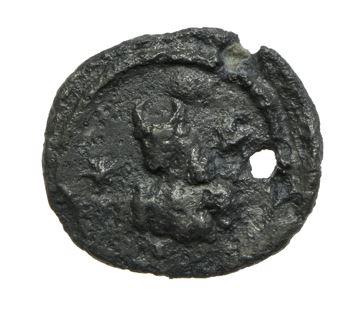
Lead token issued by the Sacred Gerousia for a festival sponsored by the Sacred Gerousia, bearing the cult statue of Dionysus Eleuthereus.
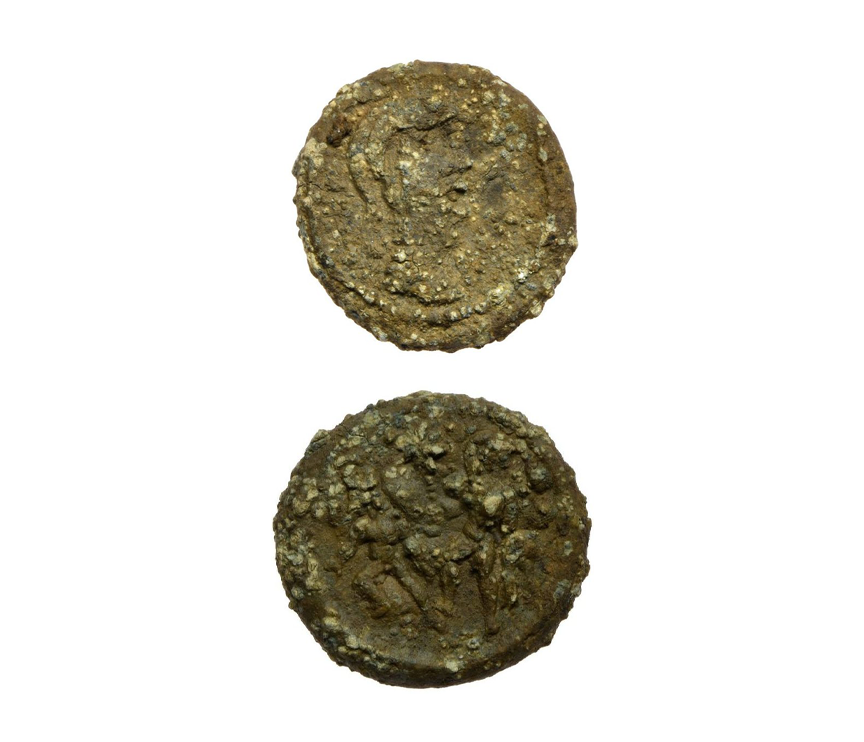
Lead token for the Panathenaia and/or the Theseia with Athena bust on face a and Theseus slaying the minotaur on face b.
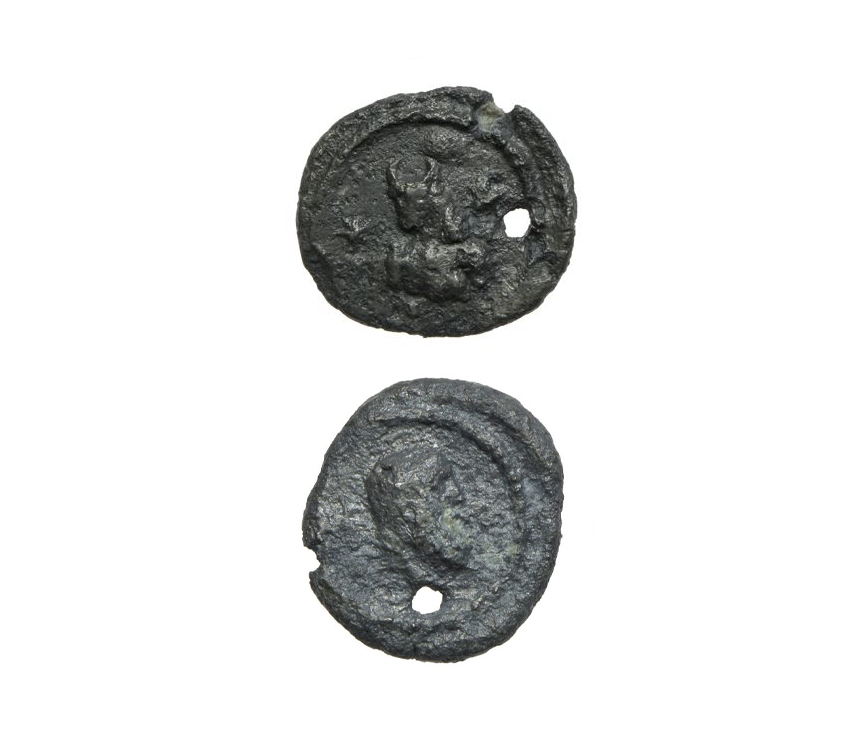
Lead token for the Theseia.
Images: ASCSA: Agora Excavations. Photos: M.E. Gkikaki and Giannis Tzitzas © Hellenic Ministry of Culture/Hellenic Organization of Cultural Resources Development (H.O. C. R. E. D.)
© 2026 Tokens of ancient Athens